
Care Not Cops hosts grassroots networks in the colonial city of glass
“Wait a sec, we are also the membership:” Reflections on self-organizing for a fourth annual convergence
By Care Not Cops
This article is based on an May 2026 roundtable discussion featuring Sparkling Fast River Rising Woman Mona Woodward (President, Surrey Union of Drug Users), Dave Hamm (President, Vancouver Area Network of Drug Users & Member-researcher, P.O.W.E.R.), Reed Adams (Member, Devil’s Club Street Medics & Member-nurse, Care Not Cops) and Nesa Hamidi Tousi (Member-nurse practitioner, Care Not Cops). Sakura Rashidi (Member-dietician, Care Not Cops) and Heather Tunold (Member-harm reduction educator, Care Not Cops) co-facilitated the roundtable; Tyson Singh Kelsall ਟਾਈਸਨ ਸਿੰਘ (Member-social worker, Care Not Cops; Member-researcher, P.O.W.E.R.) and Blake Edwards (Member-nursing student, Care Not Cops) provided editorial support.
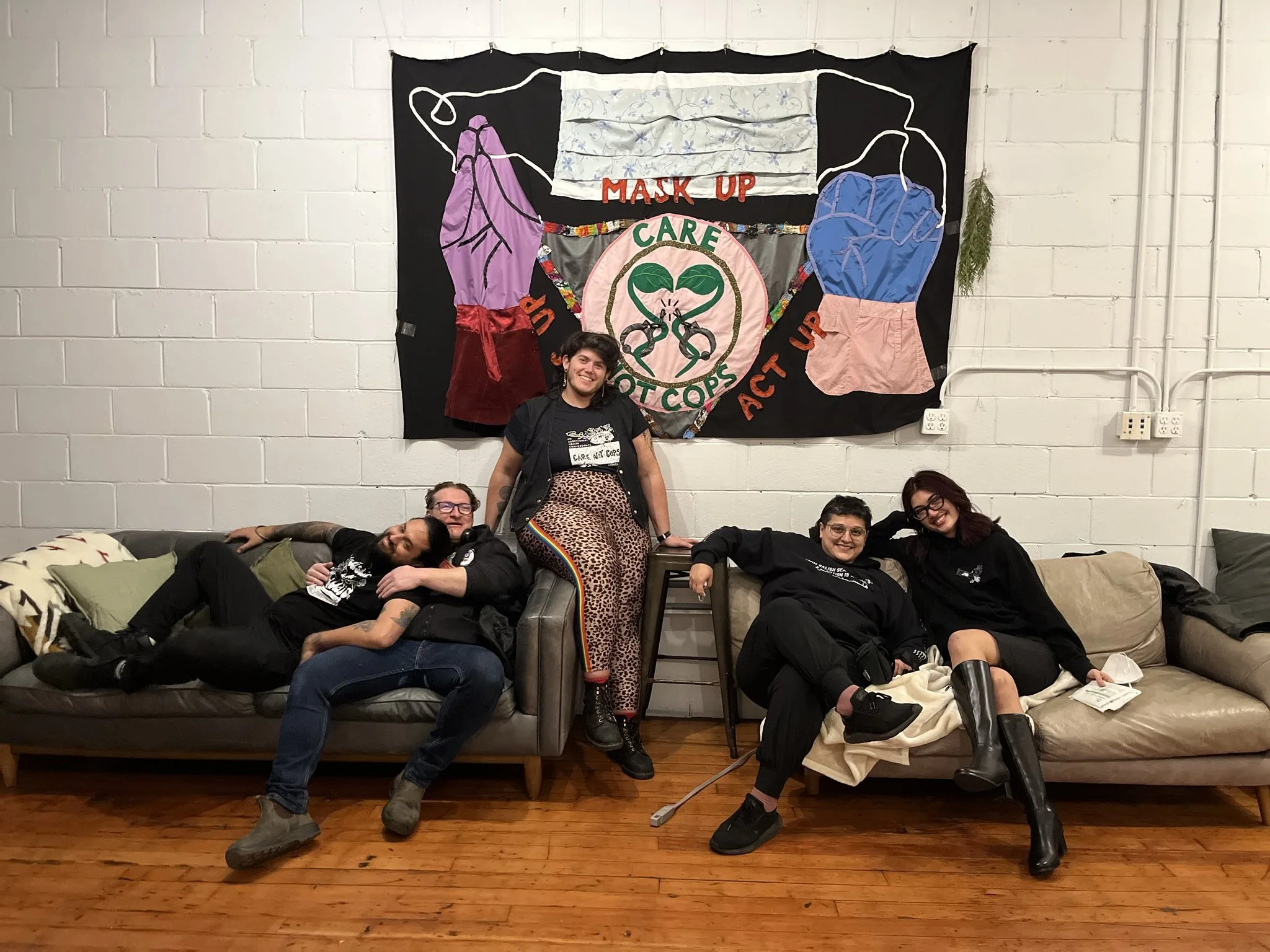
Care Not Cops members at the 2025 convergence. Banner by member Mand.
Before Care Not Cops members have a chance to get situated to discuss our next convergence, a caravan of VPD officers ride past on their motorcycles, subsuming the sounds of the Downtown Eastside.
The red siren lights that flash through the window of our borrowed meeting room near the intersection of Main and Cordova are a reminder of how policing and its associated infrastructure is woven into our daily existence. Our topic, fittingly, is abolitionist and anti-carceral self-organizing in a colonial city, and collective hope for change.
Care Not Cops is a collective of health-care workers that came together alongside the 2020 groundswell of resistance that emerged following the leadership of Black community leaders and groups, in response to the social crises compounded by rapidly accelerating police budgets that left little for community infrastructure, while police perpetuated racist violence and killings of Indigenous and Black people. Our goal is to resist the ongoing presence of and encroaching of policing in health-care spaces.
Speculative Abolition: Art, Documentation and Medico-Legal Disruption, taking place this September, will mark the fourth consecutive annual convergence dedicated to anti-carcerality in health care.
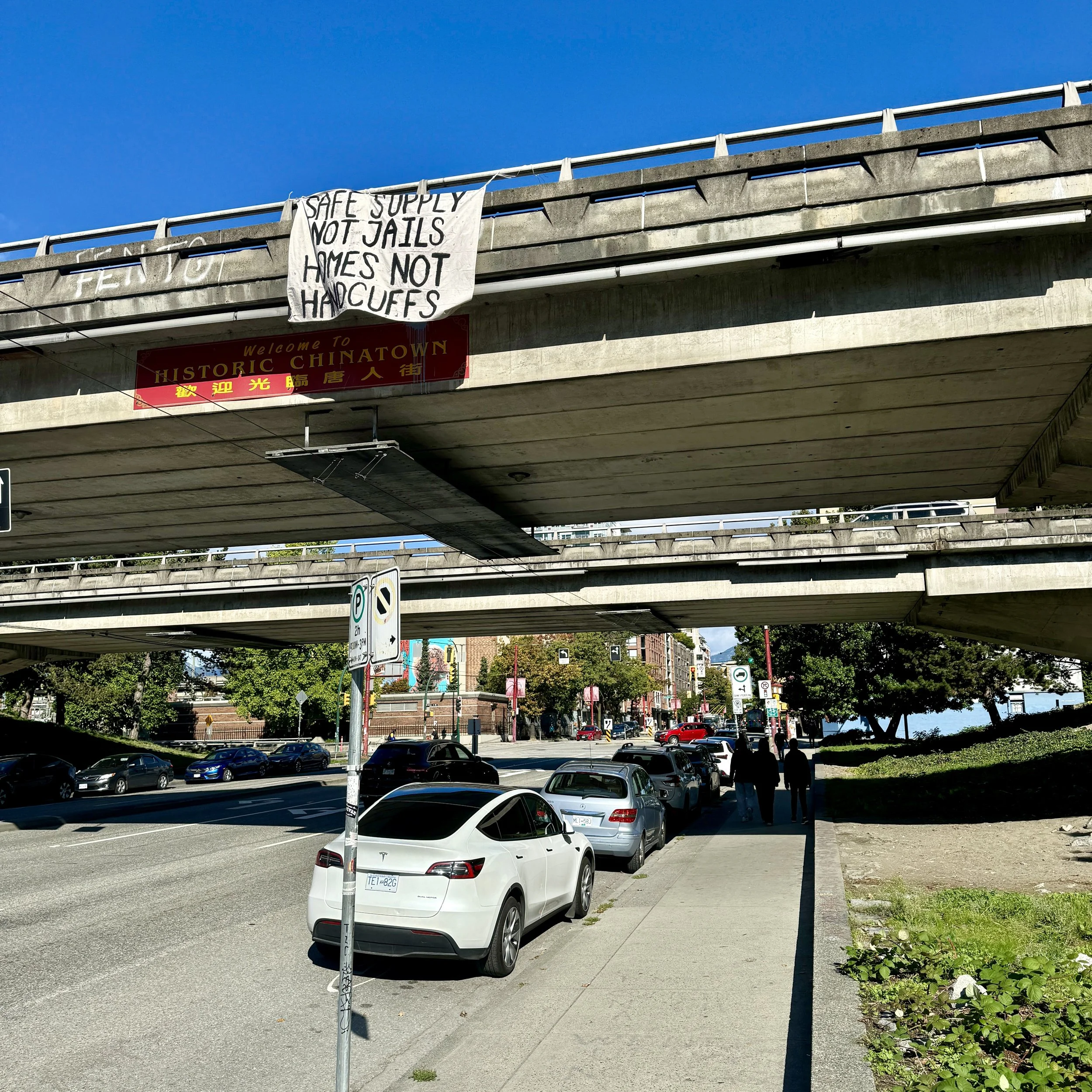
A banner reading “Safe Supply Not Jails, Homes Not Handcuffs” hangs from the viaducts near Main & Prior streets. Vancouver. 2024.
In the meantime, police have been empowered with new legal tools alongside new spaces of carceral infrastructure–such as increased locked wards for forced treatment being built across BC. Forced treatment apprehension under BC’s Mental Health Act is already employed by police officers thousands of times per year.
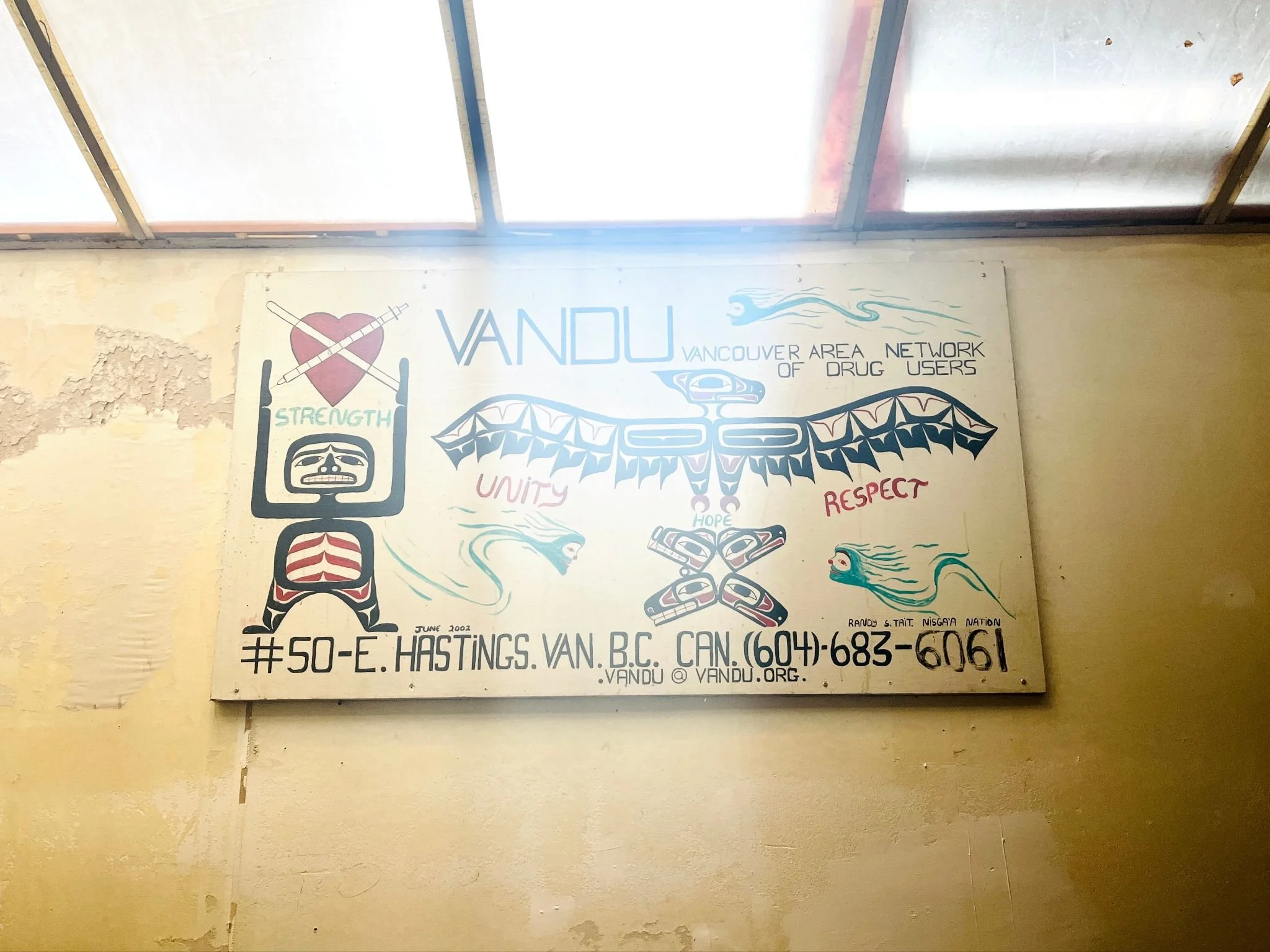
Sign in office, Vancouver Area Network of Drug Users. Vancouver, 2026
The VPD’s operating budget (which excludes capital costs of the VPD, and contributions to the transit police and/or bylaw and park rangers) will eclipse $500 million of the city budget for the first time in 2026. In 2025, the VPD added another police station in the DTES, on the third floor of the Woodward’s building and in 2026, opened a police academy in the same building.
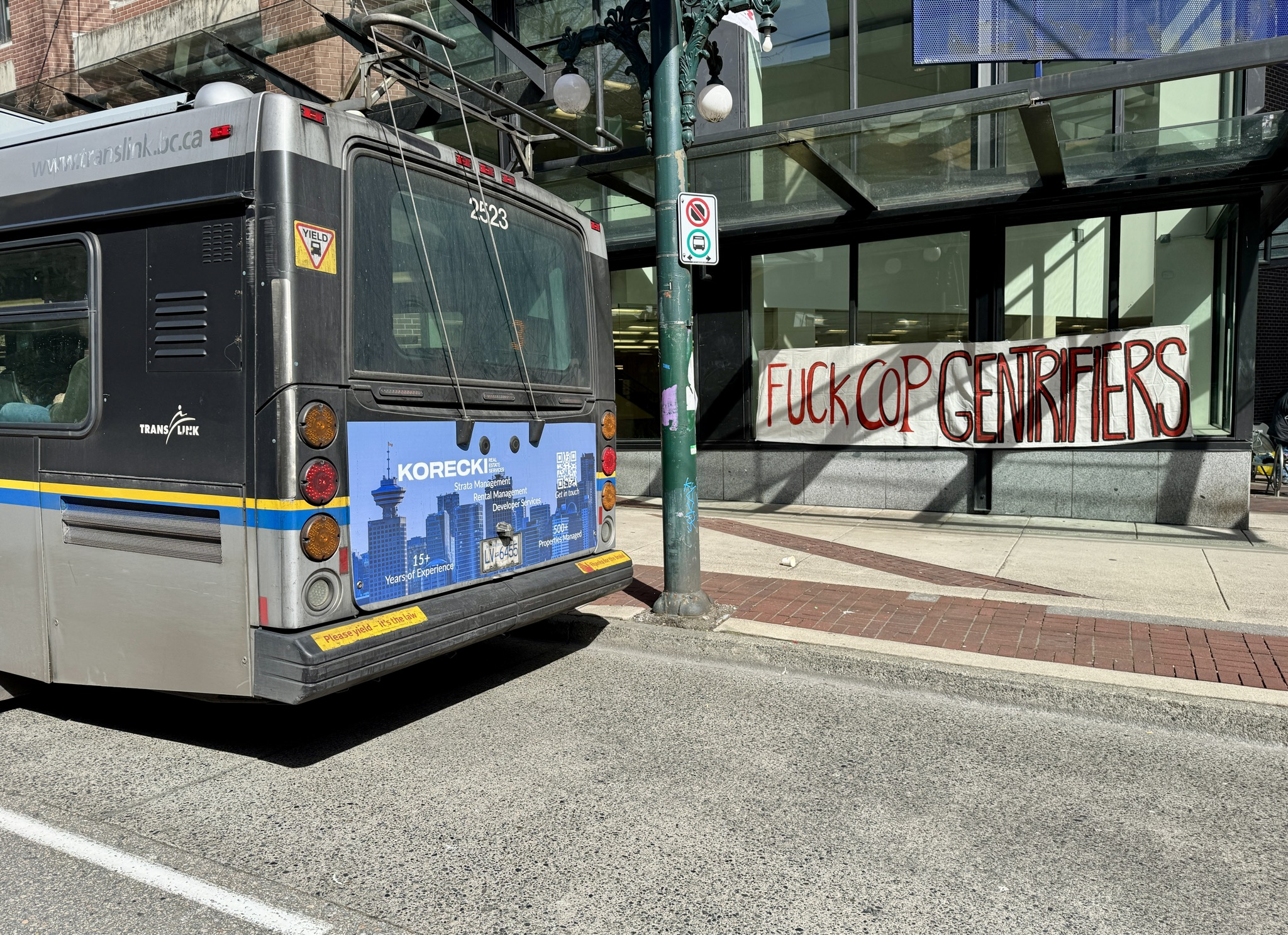

Gathering toward undoing
As the carceral state continues to widen its net, Care Not Cops believes speaking directly to each other is just as important as any other audience–and while police power relations appear unyielding, it is a network of resistance that ensures ruptures in the carceral mesh. In these pockets of rupture we can build the relations for a better world–a world centered on notions of care, not cops, while we resist the systems that produce premature death and state sanctioned violence.
This begins with how we organize and facilitate ourselves.
Nesa Hamidi Tousi, the longest active member of Care Not Cops, describes the idea for today’s roundtable: “I feel like the collective believed that coming together as a group, themes would emerge through conversations that we have, rather than setting an itemized agenda, which can take humanity out of our process.”
What comes from our discussion are reflections on what being part of Care Not Cops has meant to members, how we learn from each other, and how we centre respect and collaboration.
A continuous thread
Sparkling Fast River Rising Woman, Elder Mona Woodward nêhiyaw iskwêw, believes in the power of community and “creating that safe place for people to gather and feel comfortable enough to share and to be honest about their issues, and feel supported.”
“That is where the magic happens from my perspective,” says Heather Tunold, reflecting on the practical benefits of community-built spaces. “When people started coming to SUDU [Surrey Union of Drug Users], that sense of belonging actually impacted every part of their life, right? And so, I can say that there are so many people’s lives that you've had a role in [as SUDU’s president], Mona.”
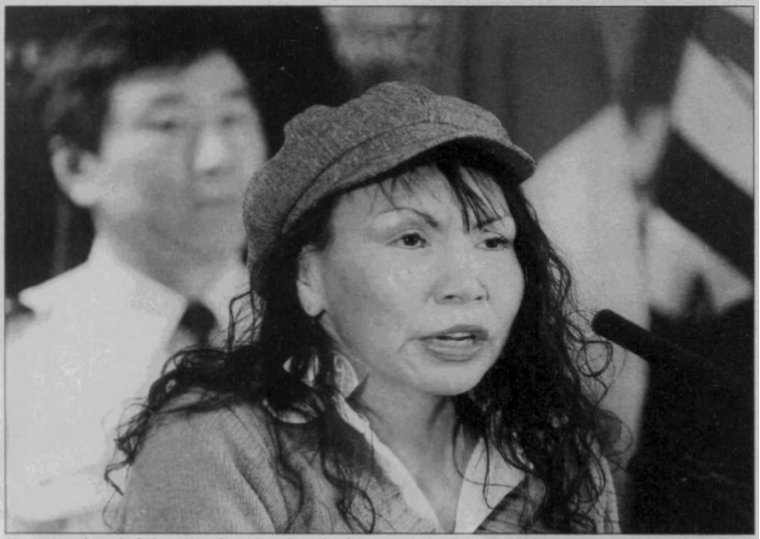
Newspaper clipping from ‘The Province.’ Sparkling Fast River Rising Woman. September 2011
As a group, we all see the many doors Woodward’s commitment to justice has opened for us to keep creating alternatives to the intensifying road to carcerality. Her contributions to the neighbourhood, her continued leadership of grassroots groups across decades, and the time she spends sharing knowledge with us have been fundamental in guiding the work Care Not Cops does and honouring those who’ve paved the way for us.
Woodward has an extensive history in resisting and challenging state sanctioned violence. In 1982, Mona’s beloved sister was found frozen to death on the outskirts of Calgary. Her family has long believed she was a victim of the RCMP’s “starlight tours,” a well-documented form of violence where Canadian police officers would detain and drive Indigenous people to the outskirts of cities in below-freezing temperatures with limited clothing and possessions and no way to get back.
Mona was an early organizer of the Woman’s Memorial March in Vancouver in the 1990s, which is now an annual tradition that sees thousands of people come together in the DTES.
“I never thought it was gonna take off. Just five little Indian girls, in the middle of the road there, cars whipping by,” she says.
Her legacy as a community leader extends to being one of the early lead organizers of SisterWatch, an initiative created in response to police neglect toward the safety of Indigenous women, girls, trans, and Two-Spirit people in the the DTES and Vancouver.
In SisterWatch’s initial years, Mona would speak at events that also featured police to raise awareness about the new project, and speak on reducing the violence facing her kin. These days she says she felt “used” by the VPD representatives from that time; that they exploited her presence at these events as cover for their continued negligence.
Woodward’s presence and knowledge ensures a continuous thread in challenging local police and colonial power, especially with Speculative Abolition taking place as the city of Vancouver has continued to go all-in on police spending.
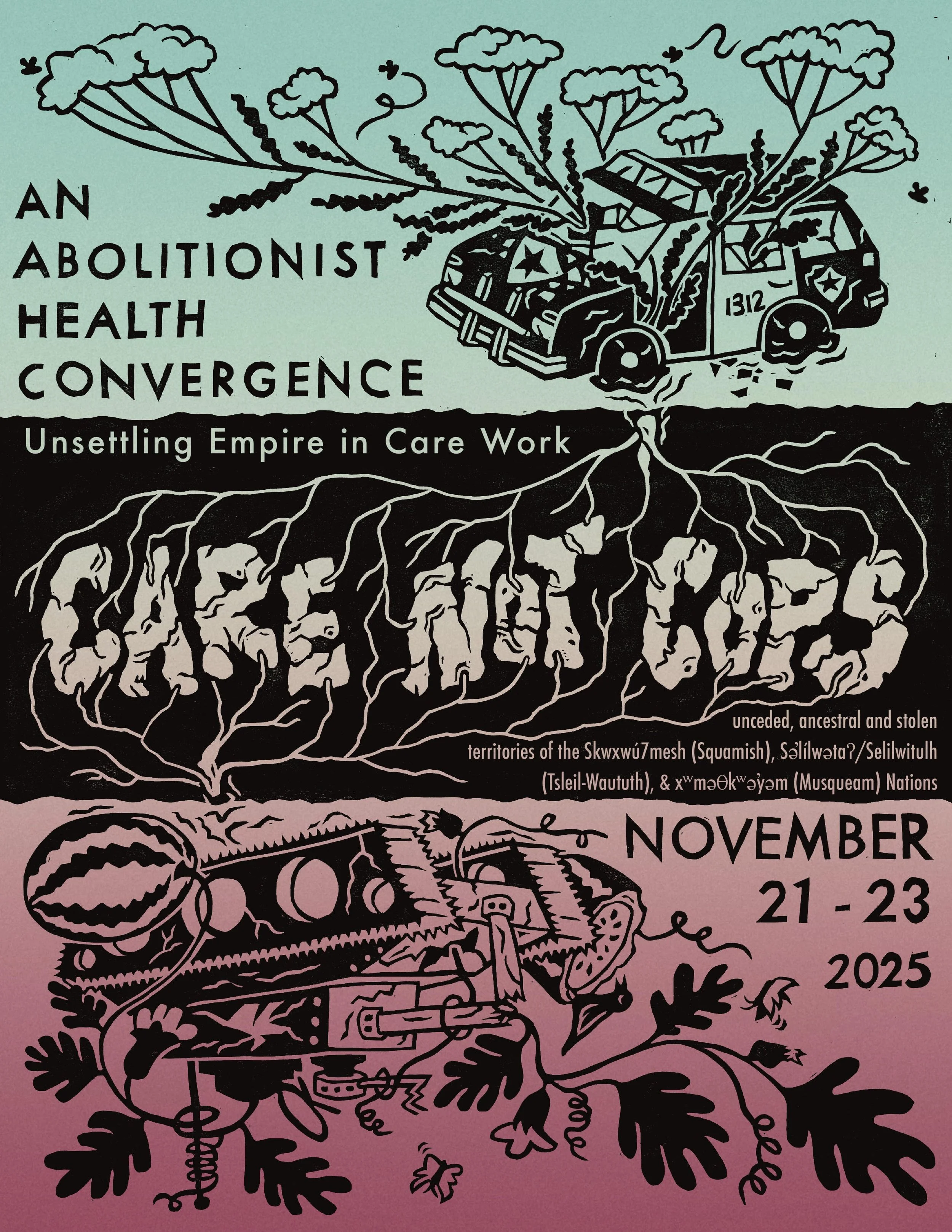
Care Not Cops convergence poster. 2025
Devil’s Club; decentralizing care
The practical, liberatory harm reduction and collaborative elements of Care Not Cops’ anti-carceral network can offer, as well, become a powerful tool of resistance and empowerment.
“I feel that was the first time that I have been a part of organizing a movement space where the priority was really skill-building,” says Sakura Rashidi. “It was the first time it was not about, like, ‘oh we're gonna make an organization.’ It was more like, ‘we're a group of individuals that have these skills.’”
After attending the Devil’s Club Street Medics (DCSM) presentation at the 2024 Care Not Cops convergence, Reed Adams was inspired to join the group. “The street medics had a presentation, which I found really fascinating […] There was a lot of discussion about how they related to organizations and other groups within the city. I really liked that piece.”
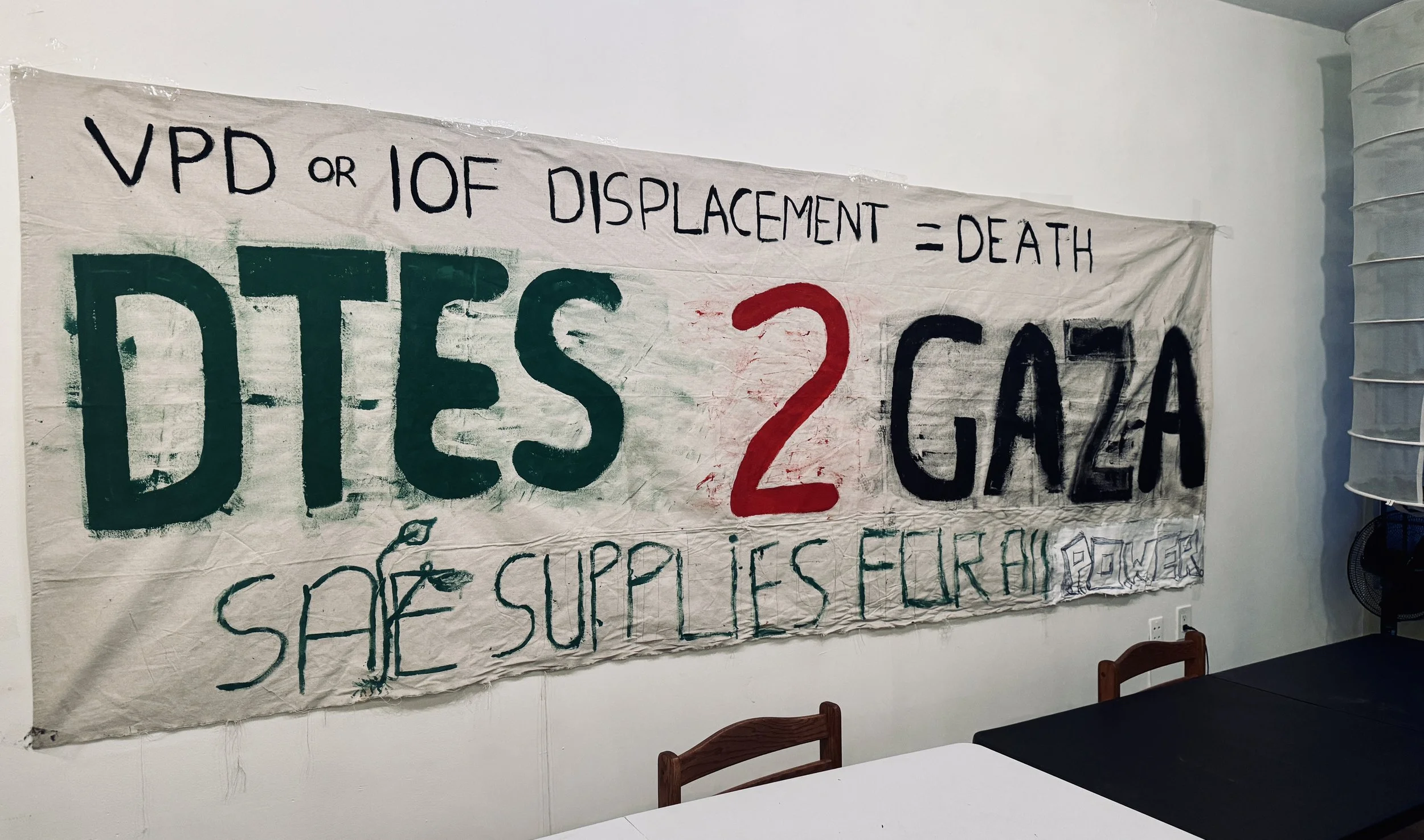
Banner at Care Not Cops convergence behind the P.O.W.E.R stall. Vancouver, November 2025.
Rashidi, alongside other members of Care Not Cops, Canadian Students for Sensible Drug Policy, Stop the Sweeps, and the Eastside Illicit Drinkers Group for Education, helped organize the street medic training at the Vancouver Black Library that led to the start of the DCSM earlier that year.
This training emerged in direct response to the escalating violence and seeming omnipresence of carceral systems, the urgent need for medics at actions locally resisting the ongoing occupation and genocide in Palestine, and the broader calls for mutual aid expansion locally.
“And so, what came out of it was a bunch of people with different backgrounds and different levels of experience [having tools for] first aid and medic-ing,” Rashidi continues. Ultimately, the multi-day training disrupted health-care norms by decentralizing tools for the provision of care and crisis response.
Care Not Cops members Adams and Rashidi both remain part of DCSM. The street medics provide direct support, education, and training at various community events and actions. The actively growing collective currently has 39 medics and 10 core people who coordinate requests from the community to show up.
DCSM hosts internal and community skill shares for naloxone training, emergency heat response, and ongoing wound care workshops. Pairs of DCSM medics are often present at marches, protests, and community care events. During the 2026 FIFA soccer games, DCSM collaborated with Sex Workers Interrupting FIFA Atrocities (or “SWIFA”), a sex worker-led group that came together to provide a drop-in space for the workers most negatively impacted by the up to 1,300 police officers deployed in the city on game days – generating heightened forms of displacement, criminalization and harassment.
Urgency of the moment
“Our situation is so dire right now because of the grief and the death,” says Tunold.
It is the 10th year of B.C.’s toxic drug public health emergency, and so the police parade is also a stark reminder of ballooning police budgets in the face of what little harm reduction resources exist rapidly being rolled back. Those attempting to solve the emergency without waiting for state intervention, like the local Drug User Liberation Front were until October 2023, have been raided and shuttered by police.
In 2021, a Care Not Cops member spoke at the B.C. legislature’s Special Committee on Reforming the Police Act, and presented the group’s enduring perspective that “ending a police-driven drug war” is needed to reduce the deaths related to the toxic drug crisis.
While B.C. implemented a three-year decriminalization pilot in 2023 that was ultimately co-opted by police influence, before being reformed almost out of existence after just 15 months after an amendment to exclude the pilot from outdoor space. The BC NDP allowed the pilot to expire altogether in January.
For Adams, being responsive to community needs is at the heart of the decentralization of care.
Reflecting on discussions of how to respond to the opening of the new VPD training academy at the Woodward's building, a site of historical community resistance in the DTES, Adams says feedback from community members was helpful. “I think from P.O.W.E.R. members [we heard] ‘we just want to show up and take space,’ which was obviously the right move,” says Adams.
During FIFA, other Care Not Cops members supported pop-up overdose prevention sites (POPS) led by Police Oversight with Evidence and Research (P.O.W.E.R.) and many community volunteers on evening game days to provide outreach and be on copwatch. The POPS group connected with 643 people across the seven game series according to P.O.W.E.R’s tracking.
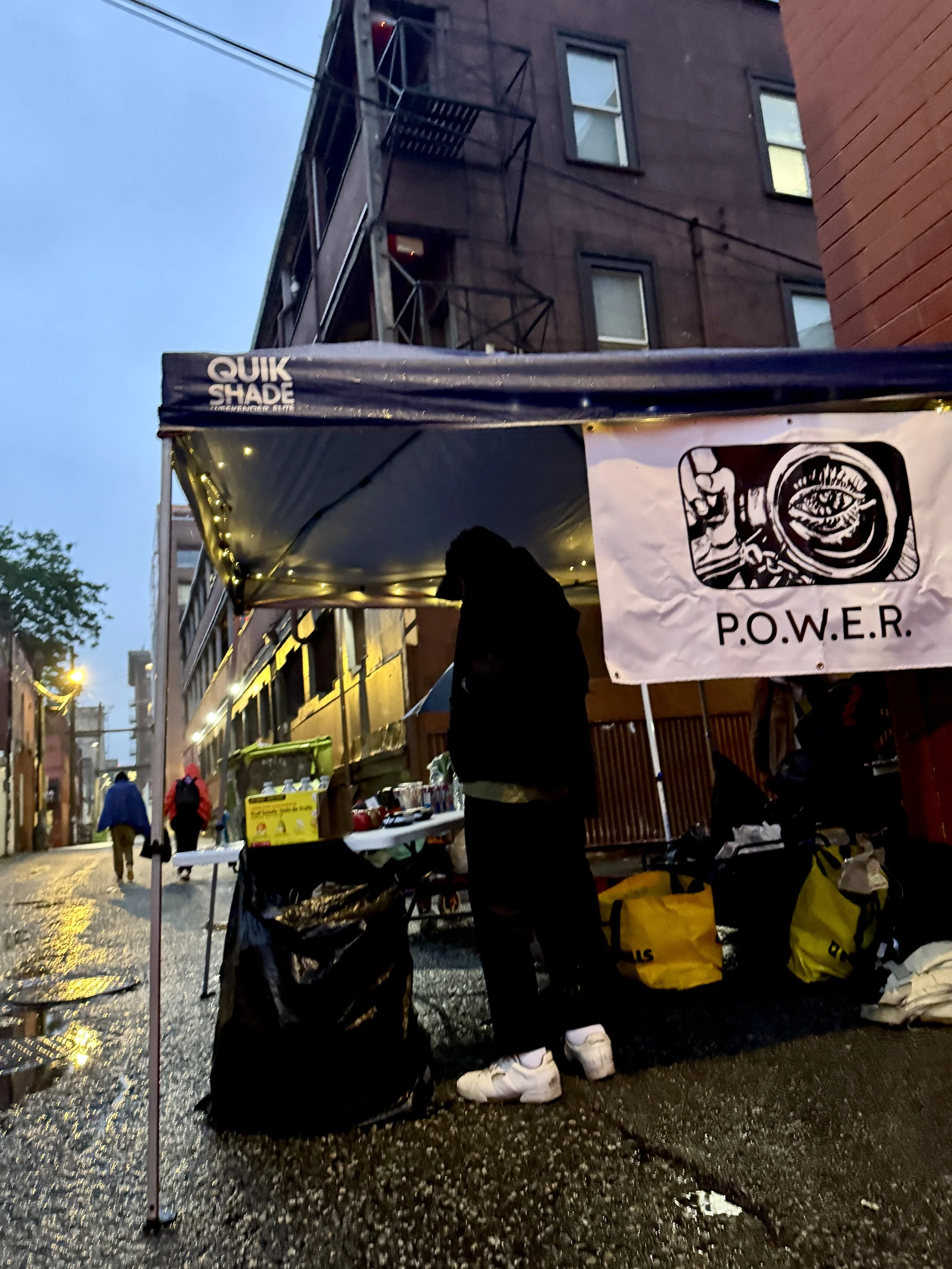
Photo of “POPS.” Summer 2026.
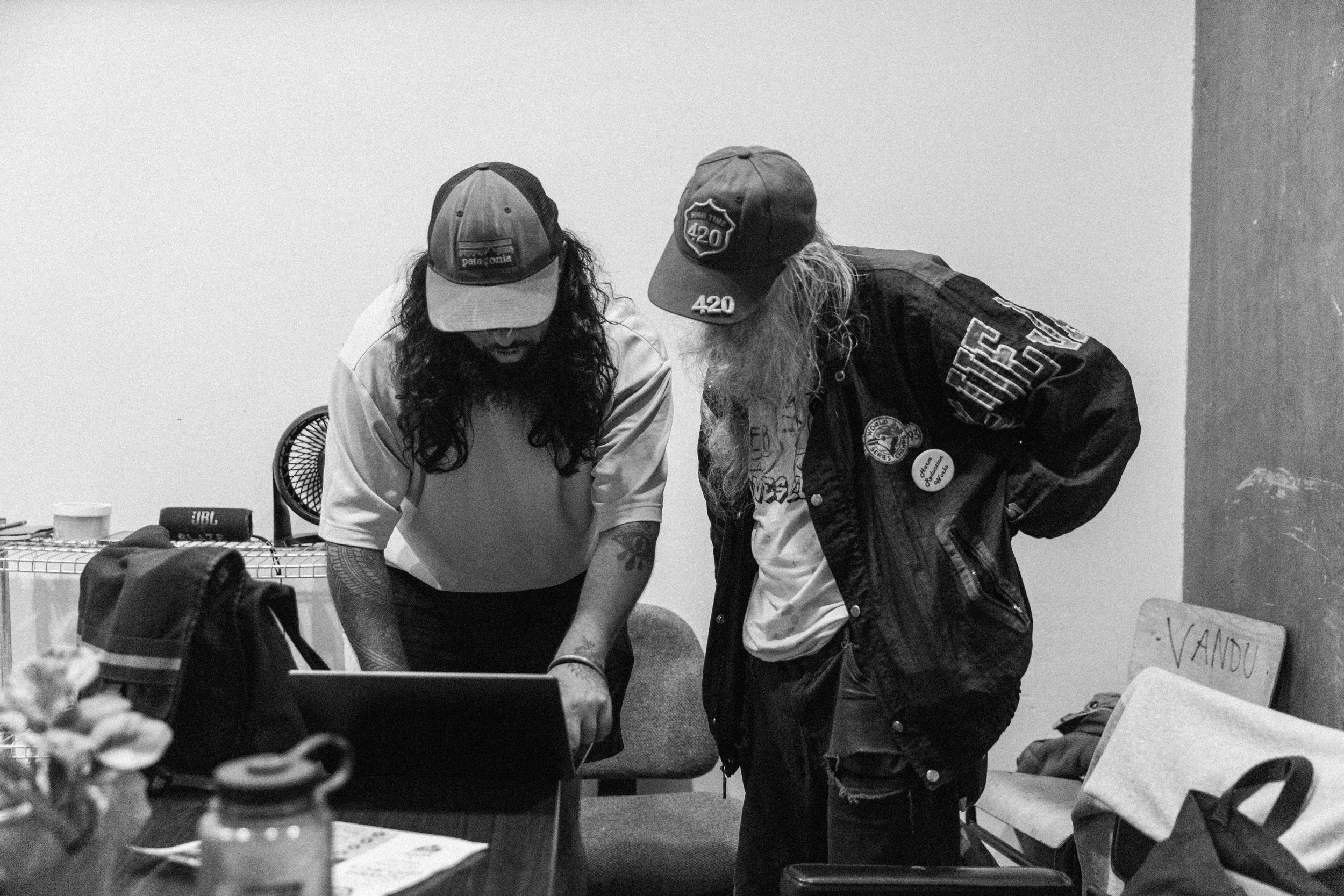
P.O.W.E.R members. Vancouver. July 2024.Photograph by Jackie Dives
Sustaining critical movement threads
By bringing networks together, the collective seeks to support the mycelium of abolitionist care and practices in the way health-care services are provided, to expand across communities beyond our own.
We can choose to approach health care from a place of genuine curiosity, connection and support, centring compassion and inclusion.
Woodward shares a story which shows how SUDU’s Punjabi-language committee, the South Asian Advocacy Network for Justice and Harm Reduction (SAANJH), has put this into practice, challenging cultural divisions within the drug user community, while resisting racist organized abandonment. She recounts that in 2025, a SAANJH member died from the toxic drug supply. This member was a migrant worker, a group of people who are critically impacted by the crisis. One of the group’s co-founders, Anmol Swaich, carried the member’s ashes back to his family in Punjab.
As SAANJH aims to “combat racism and social exclusion of South Asian people who use drugs,” they do so without waiting for the state to act, even in times of grief – and while ensuring space for that grief.
Collaboration and the generosity of others
The steady and intentional planning of time-limited, annual gatherings has provided Care Not Cops the opportunity to build on our relationships and be able to receive critical inquiry and feedback.
As a grassroots, volunteer-based collective, Care Not Cops has had others generously reach out to us–in generative and curious ways–to make our gatherings more inclusive. This has been essential as a vetting process with limited resources can only capture so much, both in terms of the annual gathering and in our other collaborations.
Finding out about an inappropriate presenter, Rashidi says, enabled the collective to act. “We were given the benefit of the doubt; [...] we were given the trust that this wasn't an intentional move on our end to cause harm to people,” Rashidi says.
“Community connection and relationship building is a slow process that we have to be patient with and these exchanges highlight areas that we're not aware of, or are not areas that we've thought to reflect on – it is a helpful two-way street,” Hamidi Tousi adds. “It’s beautiful when you have those trusting relationships where people feel like they can come to you.”
Identifying the importance of approaching social issues and their potential resolution with curiosity to avoid slipping into moral authority, Tunold says. “In the spirit of acknowledging there's such big urgency and grief and heaviness that we're all carrying, I think it's worthy of holding the expectation of comrades and people who are co-collaborators, people from the outside looking in, to hold discernment,” Heather continues.
For Tunold, it is important that we differentiate the forms of accountability we direct toward distinctive relations and structures – including organizations that benefit from the nonprofit industrial complex–compared to the rubric we might apply to voluntary collectives rooted in shared identity and values. In this case, health-care workers who are focused on removing criminalization from health care through harm reduction and other alternatives to carcerality.
Staying with change
For Vancouver Area Network of Drug Users (VANDU) president Dave Hamm and Hamidi Tousi, for movement spaces to sustain, they have to be dynamic and adaptive. As Hamidi Tousi puts it, “People change, ideas change, we shift, and we need those structures and systems to be agile.”
“And your [group’s] personal dynamics change, too […] like dynamics within organizations, you know what I mean? Like, you know, how misogynistic our organizations can still be.” Hamm reflects on the enduring presence of power stratifications within community and movement spaces that can mirror everyday life.
Organizational approaches to internal issues can vary greatly – from changing governing principles and protocols in the case of VANDU, or collectively renewing our community values as Care Not Cops – but to sustain is to nurture the relational pieces.
Coming together based on shared identity and principles can make all of this planning more tangible. “Wait a sec, we are also the membership!” laughs Hamm, describing situations where the VANDU board might separate their own needs from those of the members.
It is not as abstract as a governance structure where representatives make decisions for others; instead, we strive to empower each other.
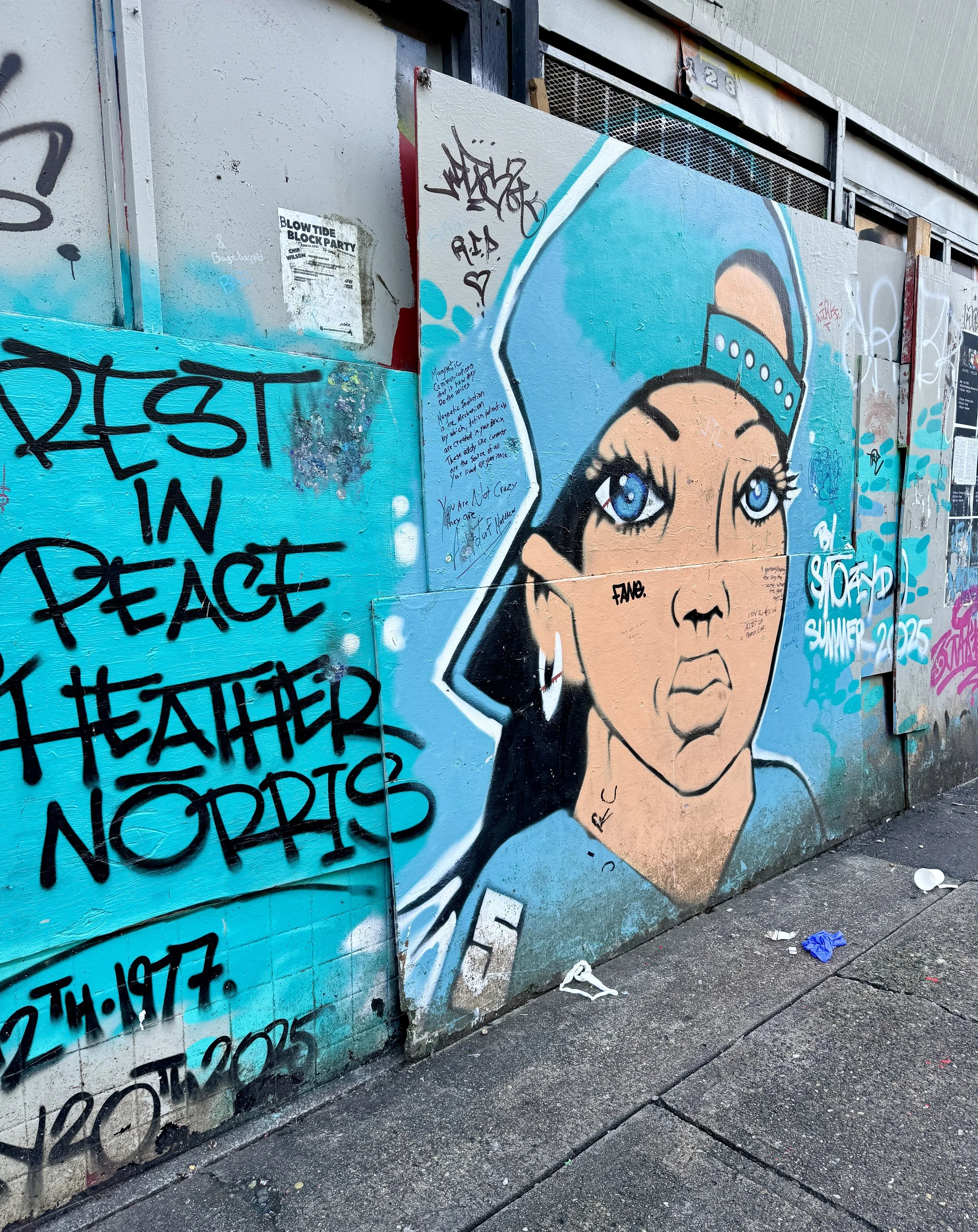
A portrait of longtime DTES resident (and sister-in-law to Care Not Cops member Heather Tunold), Heather Norris by artist Smokey Devil. Day of the Women’s Memorial march. February 14 2026.
As Woodward reminds us, “If you see something – getting done by the cops or whatever – you know you have to say something. Because if you don’t, you know nothing’s gonna change.”
Care Not Cops has an active fundraiser to support the convergence and other harm reduction work.
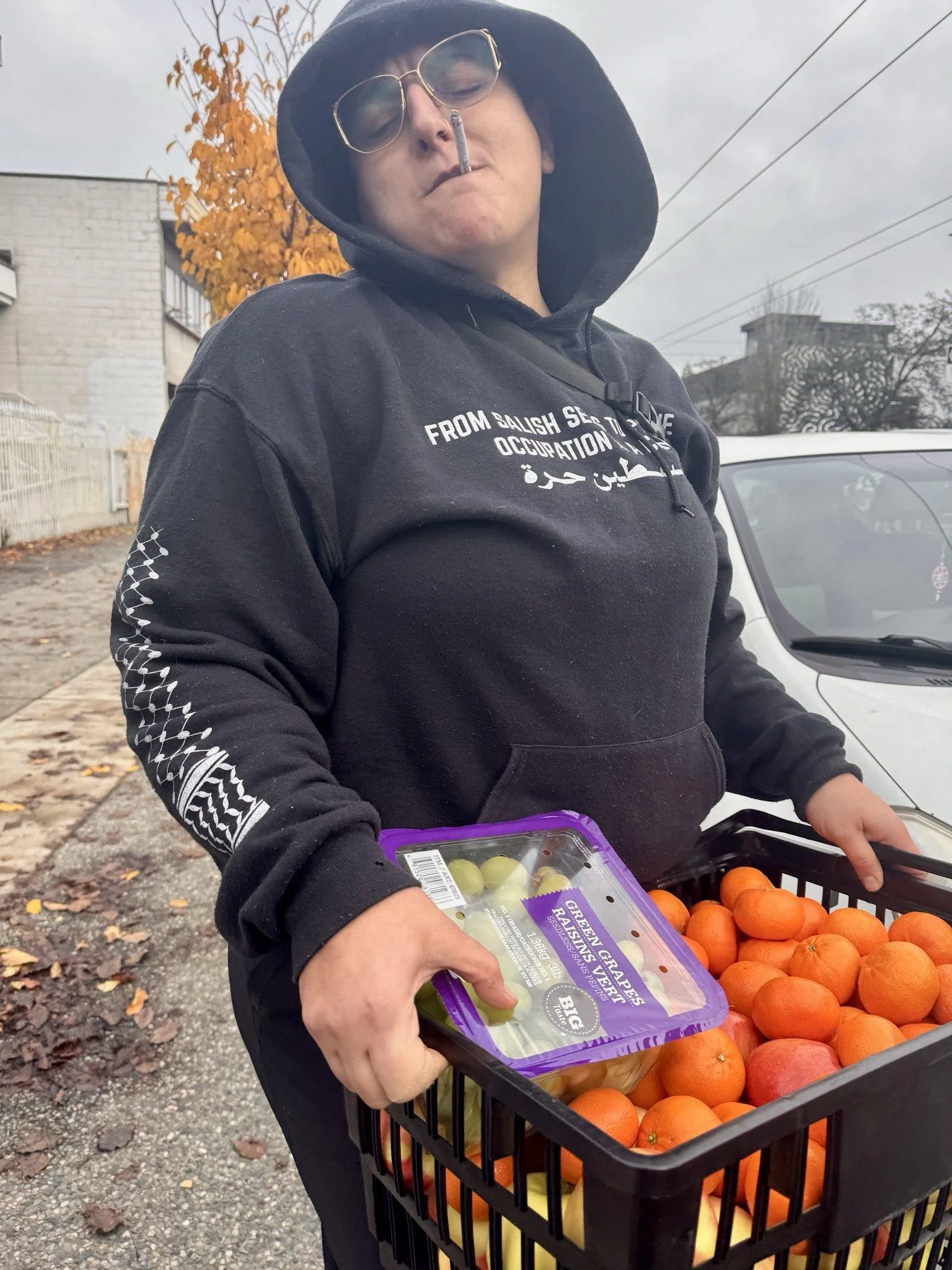
Nesa Hamidi Tousi is an activist, agitator, and nurse practitioner based primarily in Vancouver (never ceded xʷməθkʷəy̓əm, sḵwx̱wú7mesh & səlilwətaɬ lands) but originally born in Shiraz, Iran and has been an uninvited settler on CST since 1993.
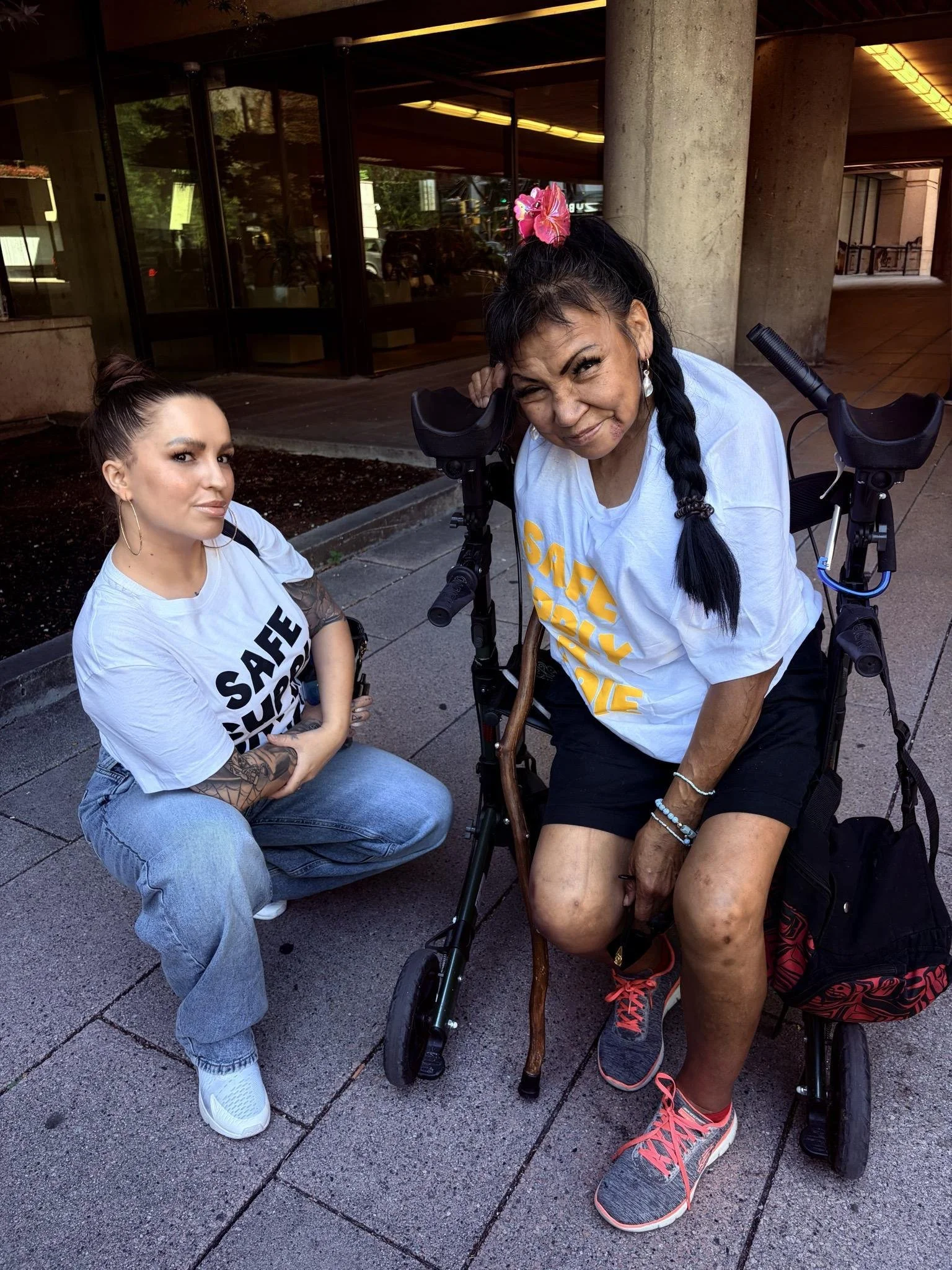
Heather Tunold is a harm reduction worker, educator, organizer and writer whose work examines how the war on drugs produces and socializes stigma, punishment, and disposability. She holds a strong lens of abolition and she is particularly interested in the praxis of care: what it actually takes to build safety, wellness, accountability, and collective care beyond punitive & carceral systems.
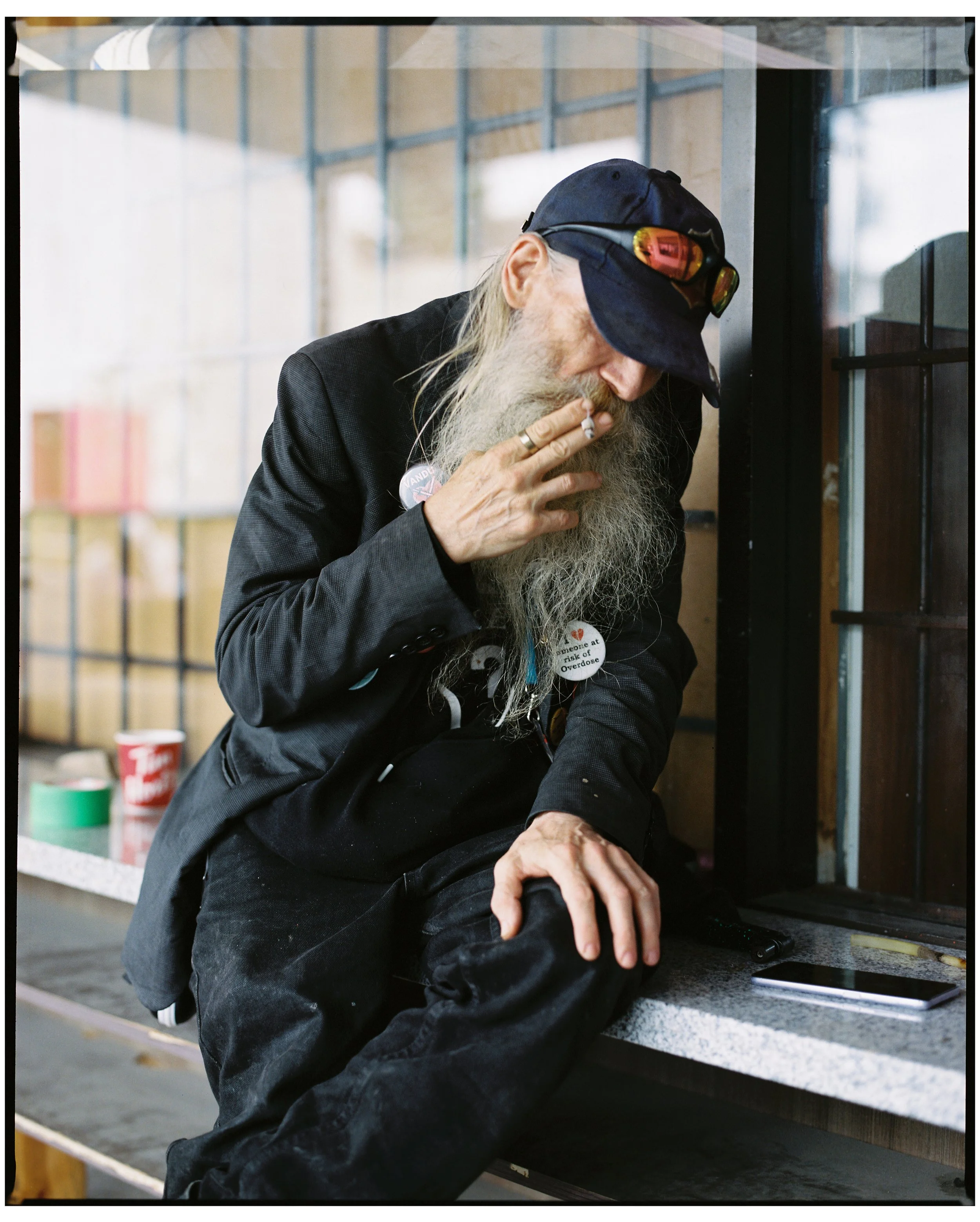
Dave Hamm is the current president of the Vancouver Area Network of Drug Users and a member-researcher with P.O.W.E.R. He has been a Downtown Eastside resident since 1986.
Other contributors include, Sparkling Fast River Rising Woman Mona Woodward, Reed Adams, and Sakura Rashidi.